what areas off the coast of california does charter want to drill for oil
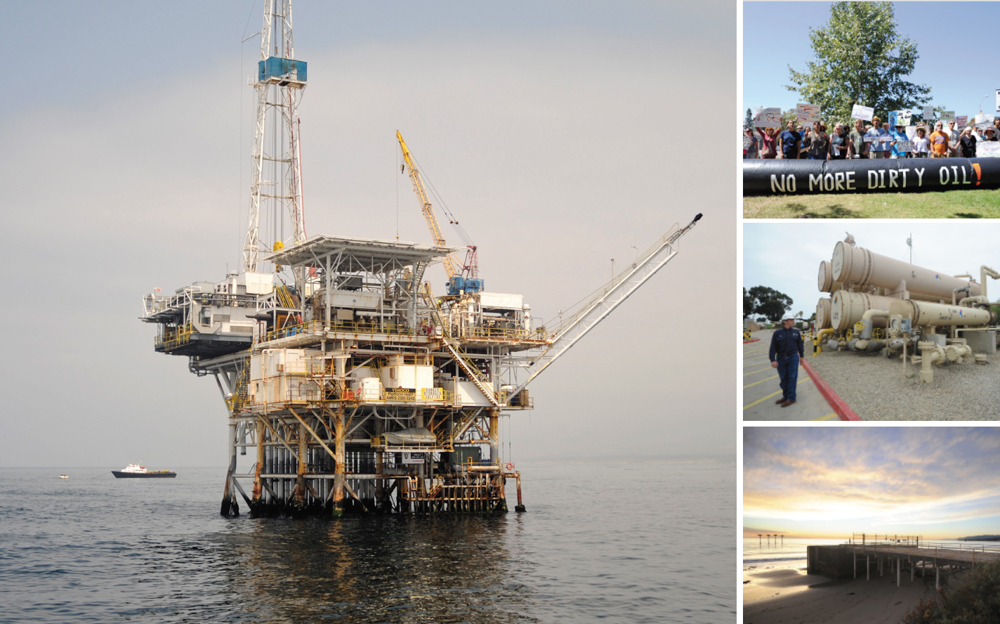
L years afterward the Jan. 28, 1969 oil spill in the Santa Barbara Channel, the region is on the verge of another upheaval – the wholesale removal of aging oil infrastructure.
Seven platforms out of xix in the Channel accept shut downward operations and will likely be removed, starting in the 2020s, together with their piers, pipelines and onshore processing plants in Carpinteria, Goleta and Gaviota.
The oil companies themselves will deport most of the cost, billions of dollars overall. At the same time, the country Legislature has been forced to budget tens of millions because sometime owners have disappeared into history or alleged bankruptcy.
The start task at hand is to plug dozens of offshore oil wells with cement, an expensive and time-consuming task
This year off Summerland, the State Lands Committee will be working on "legacy" oil wells that were drilled in the late 1890s and are leaking oil onto the beach.
Off the Rincon this winter, Chevron Corp. will begin plugging wells at platforms Gail and Grace. And off Goleta, ExxonMobil will showtime plugging two wells in the surf zone at Haskell's Beach, and 30 offshore wells at Platform Holly, starting in February and April, respectively.
"It'south an unusually happy moment to see change," said Anne Wells, planning managing director for the Urban center of Goleta. "It's something our entire community is witnessing. Nosotros're moving in the direction of a coastline that's free of our 1930 oil and gas history, into a new era of a natural coastline. I take to pinch myself."
Untested Waters
Platform Holly, installed in state waters two miles off Goleta in 1966, is slated to be decommissioned within v to seven years, state reports show; no platform of comparable size has ever been removed on the Pacific Coast. And at least six more offshore oil platforms – Harvest, Hidalgo, and Hermoso off Pt. Formulation, Habitat off Carpinteria, and Grace and Gail off the Rincon and Ventura County – may be removed around the same time. These platforms range in age from 32 (Gail) to 53 years old (Holly).
"Oil'southward been here for a long, long time," said Fred Shaw, a Carpinteria councilman who remembers the spill of 1969. "We're used to looking at the rigs, just wouldn't it be nice if they went abroad? The majority of the town would just adopt that that oil evolution wasn't here."
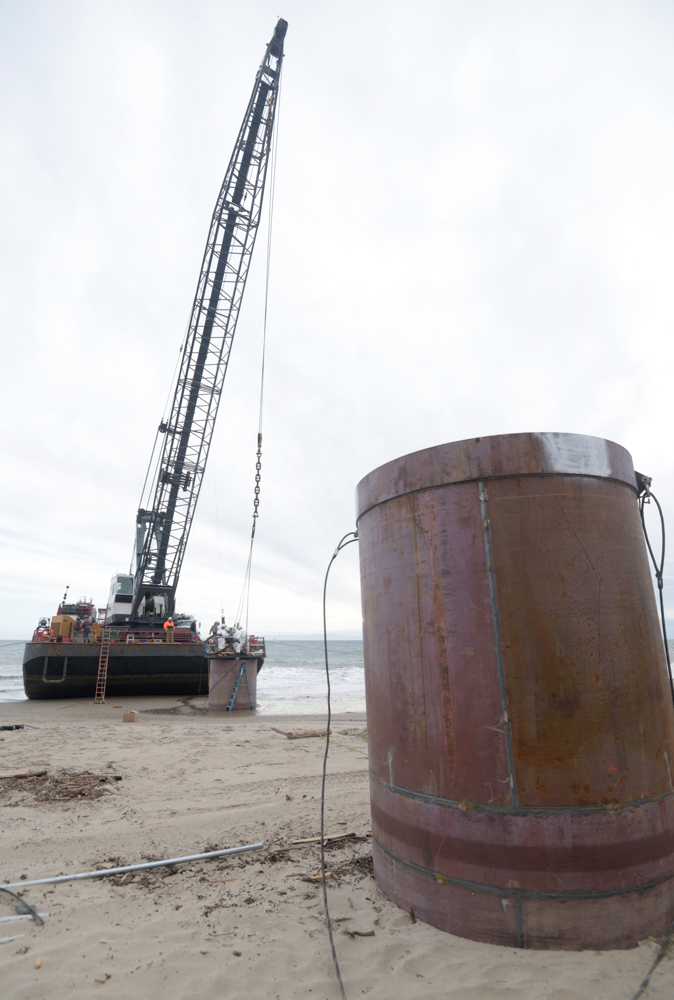
Decommissioning, though, will be a gargantuan task. The platforms were installed in water hundreds of feet deep, they weigh thousands of tons, and onshore disposal options are limited. The question of whether to go out the platform legs in place underwater – the "rigs-to-reefs" option – volition have to be hashed out during environmental review.
Bringing a specialized vessel to the aqueduct from Asia or the Gulf of United mexican states to lift the platforms out of the water is a daunting proposition. The state estimates that the mobilization lone will cost operators between $11 million and $49 million before the vessel fifty-fifty begins work. Multiple operators may want to piggyback and reduce their costs.
"Nosotros could exist looking at some fairly significant removals," said John Zorovich, deputy director of county planning in the energy, minerals and compliance sectionalisation. "I retrieve that'due south the management we'll probably be going in the next ten to 15 years."
Plugging the Oldest Wells
For residents such as Nora McNeely Hurley, it's about time. From her home on the bluffs to a higher place Summerland Beach, she can see oil leaking into the surf zone from the legacy, or "orphaned," wells that were abandoned later more the drilling frenzy of more than than a century agone.
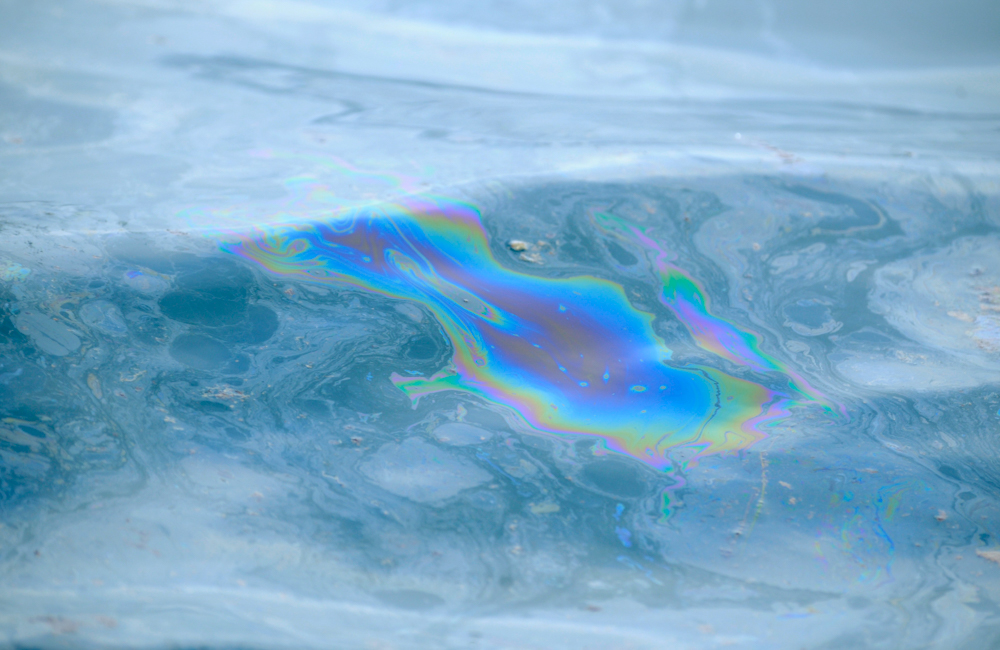
"Y'all encounter dolphins and whales and birds, and people in and out of the h2o," Hurley said. "Little do they know how polluted information technology is. Directly out from our house are ii wells leaking that evangelize an iridescent pic over the beach. It kills me it's been going on for such a long time."
Last year, at a cost of $1.ii million, Land Lands plugged a legacy well that was spewing globs of black oil onto the sand. The ii leaks that Hurley spotted had first been observed in 2016, and now they're visible again. A stench of oil hangs in the air.
Because of the complexities of plugging legacy wells, it may be possible to work on only i per year, said Sheri Pemberton, a spokeswoman for State Lands. The agency likewise needs to conduct a geophysical study off Summerland Beach, she said.
"There are seeps along that stretch of coast that may become more active as we plug and carelessness leaking wells," Pemberton said. "Nosotros are committed to doing our best to ensure that oil on the beach is not coming from a legacy well."
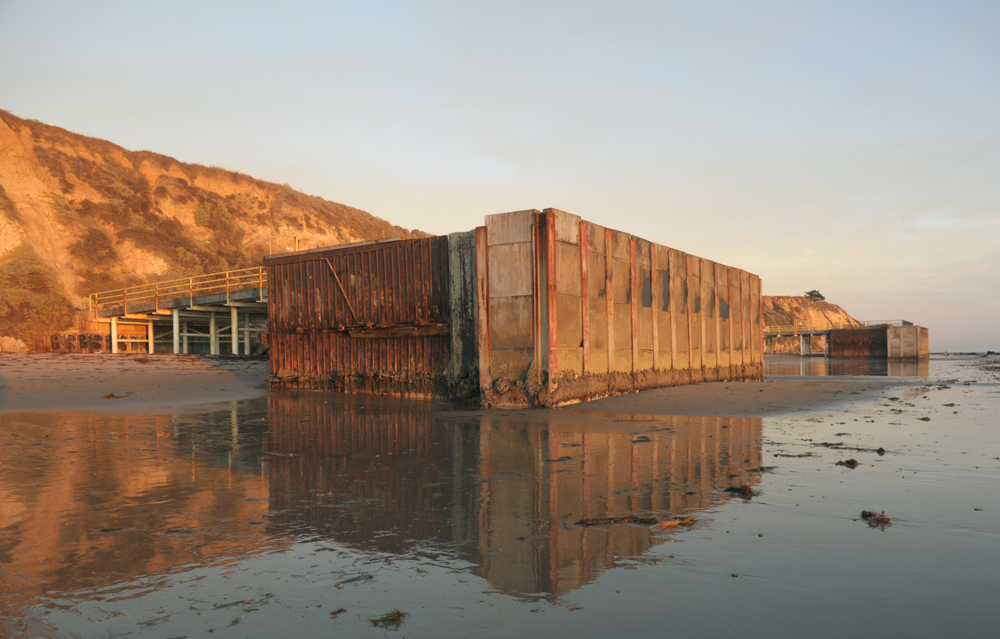
In Goleta, the two wells on Haskell'due south Beach near the Ritz-Carlton Bacara are remnants of the Ellwood Oil Field from the 1930s, before drilling at the water'due south edge was banned. After these wells are plugged, Exxon will remove the rusting rectangular caissons around the wellheads.
"The twenty-four hour period they actually showtime demo-ing downward the caisson walls is going to be a big 24-hour interval for celebration for this community and beyond," said Wells, Goleta'south planning manager. "These wells are right in the surf zone, and we saw what happened in Summerland."
Passing the Buck
Co-ordinate to a January. x State Lands study to the Legislature, Exxon expects to spend as much as $350 million to plug 32 wells and remove Platform Holly. Plugging the offshore wells, one at a fourth dimension, volition take up to 3 years, and the
platform cannot be removed until that work is finished.
Exxon sold Platform Holly to Venoco Inc. in 1997. But in 2017, 2 years afterward the Refugio oil spill, Venoco declared bankruptcy and quitclaimed its offshore leases to the land, leaving behind a meager $22 one thousand thousand bond for decommissioning. A break in the Plains All American Pipeline, which transported Venoco'south crude to refineries, had caused the spill, dumping 140,000 gallons of crude into the ocean at Refugio Beach. The pipeline remains close down.
"Venoco walked away," said Linda Krop, chief counsel at the Environmental Defense Middle, a Santa Barbara-based nonprofit grouping. "Now they're leaving us and other oil companies to clean up their mess."
Onshore, Exxon contends it is not liable for removing Venoco'southward former oil and gas processing found at Haskell's Embankment. Negotiations are ongoing; the country's position is that the company has the responsibility to assume nearly all the costs related to the decommissioning work.
But taxpayers are already shouldering some of the expense. Under an agreement with the defalcation court, the country written report says, State Lands is operating the onshore constitute and Platform Holly at a cost of $1.2 million per calendar month so that Exxon can safely plug the platform wells. Without somewhere to ship the oil and gas, the pressure level in those wells would build upwardly dangerously.
Country Lands estimates information technology will cost up to $83 million to keep the plant and Platform Holly running for three years. That's equivalent to half the $160 million in revenues from royalties and rents that Venoco generated for the land there.
Goleta Mayor Paula Perotte is hoping her metropolis will someday be able to create a park on the 4 acres where the old Venoco institute stands, a stone's throw from Haskell's Embankment.
"That'southward the goal," Perotte said. "It would be the city'south outset park on the beach. We all want that facility to exist gone."
Venoco'south bankruptcy likewise included platforms Gail and Grace, which lie in federal waters; and the Carpinteria Oil & Gas Found. The plant is located on 55 acres on the Carpinteria Bluffs nearly a nature preserve, overlooking a harbor seal rookery.
Chevron, the company that sold the project to Venoco in 1999, has assumed responsibility for both onshore and offshore decommissioning. Looking ahead, the Urban center of Carpinteria is because whether to rezone the blufftop holding for a park.
"A lot of u.s.a. would hope that somehow we could larn that space, which is actually desirable, and create a parklike atmosphere along in that location," Councilman Shaw said.
A 19th Century Nib Comes Due
Just up the coast in Summerland, no oil company can be held liable for the offshore legacy wells that are leaking onto the embankment. The wildcatters that stampeded the area in the late 1890s are long gone. In a kind of Gold Rush for oil, they erected the first offshore oil development in the Usa – xiv wooden drilling piers and 400 shallow wells – and abandoned the mess after a big storm in 1902.
In a 2018 report to the Legislature, Country Lands estimates there are 200 "high priority legacy oil and gas wells that could, depending on their status, leak oil into the marine environment …" Of these, 192 are off Summerland and eight are off Goleta, near Haskell's Beach.
In 2017, the Legislature authorized $xx meg through 2028 to identify and plug legacy wells and remove coastal hazards, including old steel pilings and jetties.
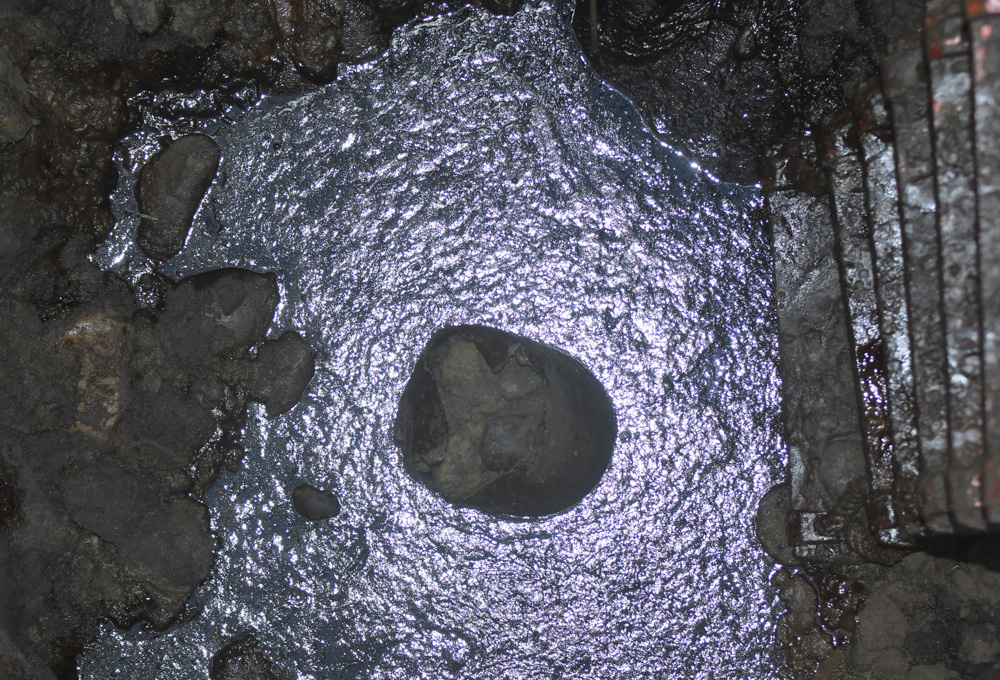
Country Sen. Hannah-Beth Jackson, D – Santa Barbara, authored the legislation. Hurley'south family unit foundation, the Manitou Fund, donated more $100,000 to Heal the Ocean, a Santa Barbara nonprofit group, partly to accost the legacy wells. Heal the Ocean commissioned dive and aeriform surveys, and the aerial photos helped swing the vote.
"We may not ever be able to cap all of the legacy wells," Jackson said last week. "They're all inexcusable, but some are creating greater issues close to shore. The nib for the terminal hundred years is finally coming due, and information technology is sadly non beingness paid by those who take defiled the landscape, the seascape and the coast. Information technology will be paid by taxpayers."
Source: https://www.independent.com/2019/01/30/offshore-oil-long-goodbye/

Postar um comentário for "what areas off the coast of california does charter want to drill for oil"